Projecting Signs in Philadelphia
Blade signs that hang perpendicular to the wall, so people walking the block see your name well before they reach your door.
The Sign You Read From Down the Block
A projecting sign, also called a blade sign, mounts perpendicular to the building and hangs out over the sidewalk. That angle is the entire point. A flat wall sign is invisible to someone walking parallel to your storefront. A blade sign turns your name toward the people already on foot, half a block before they arrive.
Both faces carry artwork, so the sign reads coming and going. They are small by nature, which is exactly why they work on tight commercial blocks: Old City, Frankford Avenue in Fishtown, East Passyunk, Germantown Avenue in Chestnut Hill, and Main Street in Manayunk. On streets like those, a blade sign does more for a restaurant or bar than a wall sign three times its size.
We draw the panel and the bracket together, build both in our shop, and set them with our own crews. A sign that hangs over a public sidewalk is not something to hand off to a subcontractor.
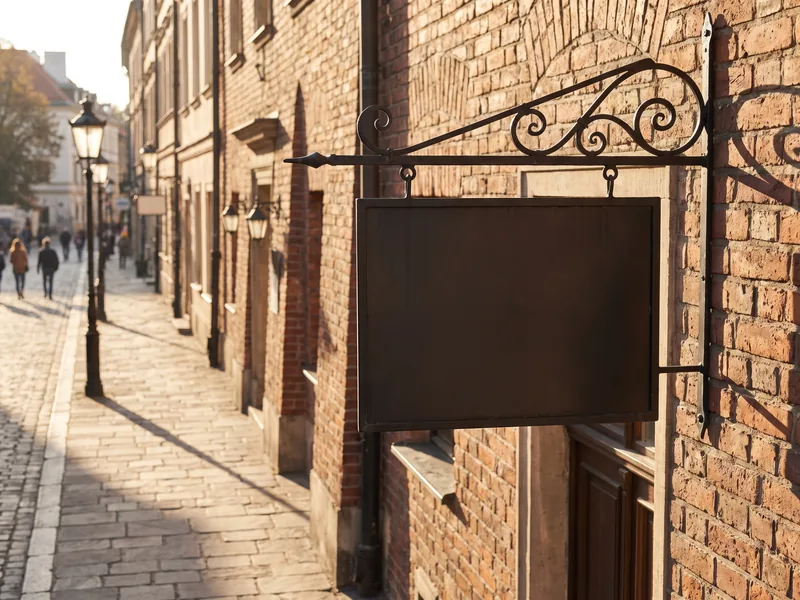
Anatomy of a Blade Sign
A blade sign is a panel, a bracket, and the wall behind both of them. Here is what holds your name out over the sidewalk, and why each piece is there.
- Mounting plate and anchors. The plate that spreads the load across the wall, with anchors set into mortar joints where the layout allows.
- Bracket arm. The horizontal member that carries the sign out from the building and sets how far it projects.
- Brace. The angled support under the arm. Scroll work here is decorative and structural at the same time.
- Hanging hardware. Eye fittings and rods that let the panel hang level and come down for service or repainting.
- Sign panel. The double-faced panel your name lives on, painted, carved, or lit, and cut to whatever shape reads fastest.
- Clear height over the sidewalk. The open space under the sign, kept generous enough for people and deliveries and sized to what your address allows.
- Downlight. An optional lamp on the arm for storefronts that want a night read without lighting the panel itself.
Brackets, Panels, and Light
The panel people read, and the bracket that holds it out over the sidewalk. Both are visible from the street, so both get designed.
The Bracket
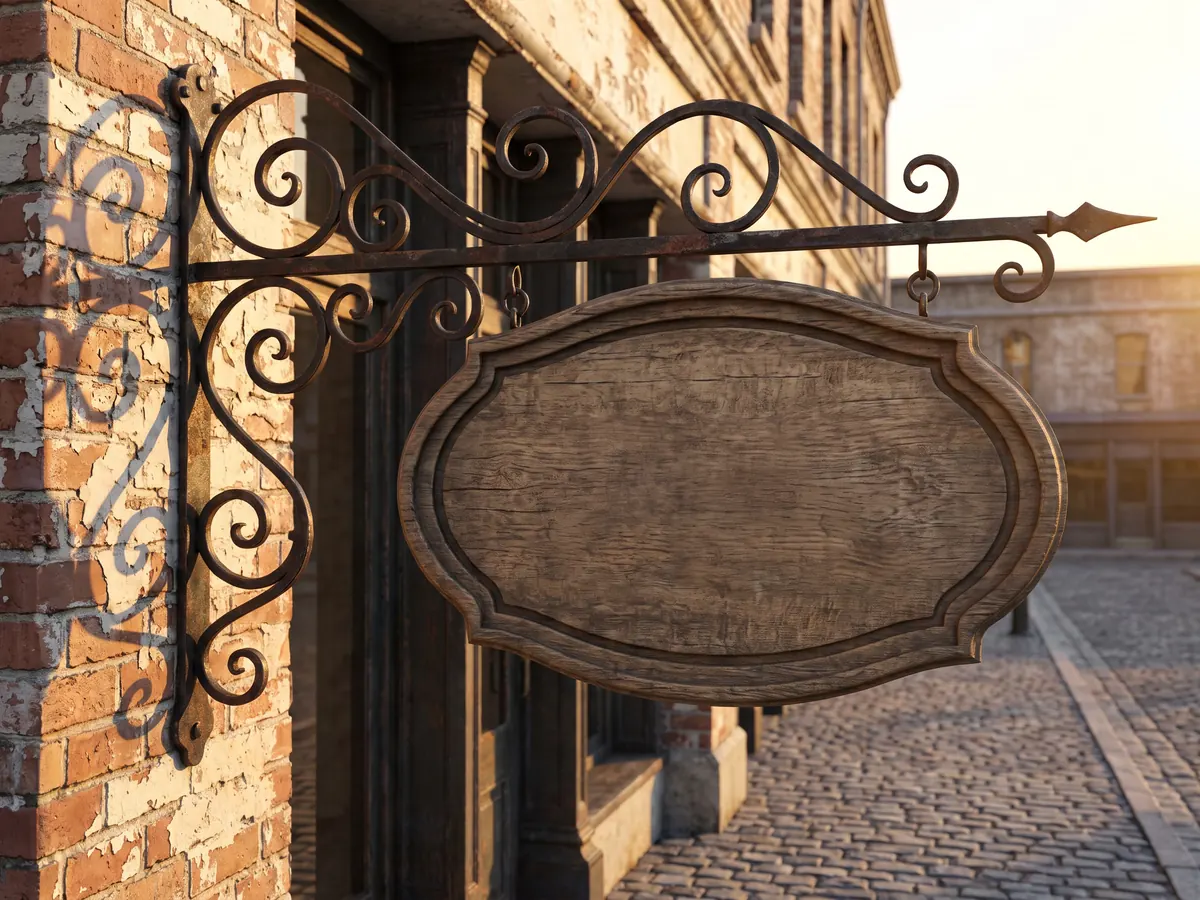
Plain steel angle finished in flat black reads modern and gets out of the way. A scrolled iron bracket reads historic and becomes part of the storefront. We fabricate either and match the finish to the hardware already on the building. On older masonry we anchor into mortar joints rather than the face of the brick wherever the layout allows.
The Panel
Routed and painted aluminum, carved high-density urethane with dimensional letters, or a printed panel behind a clear face. Panels do not have to be rectangles. Cut the shape to a coffee cup, a boot, or a pretzel and it gets read faster than any word on a crowded block.
Illuminated
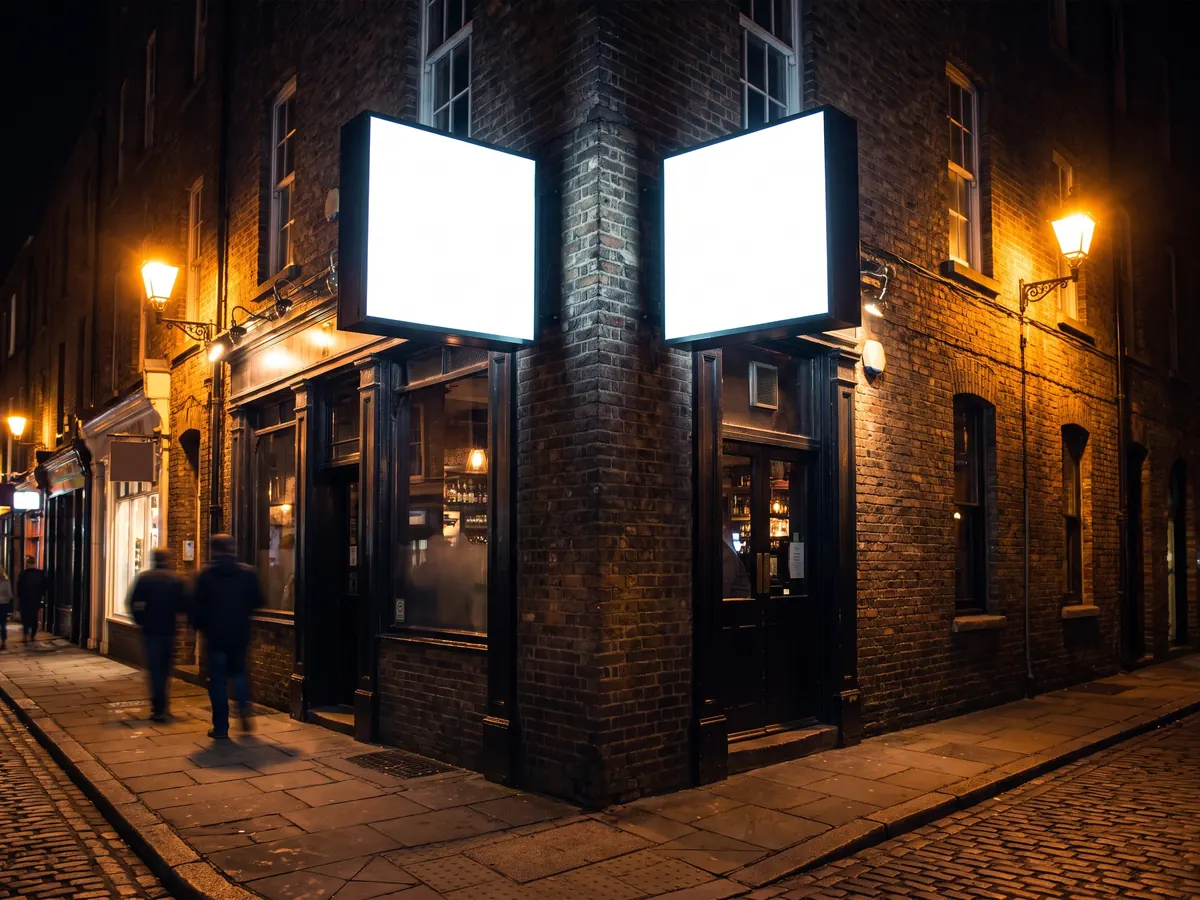
A double-faced lit cabinet is the brightest option and the standard for bars and late-hour retail storefronts. Push-through acrylic copy in a metal panel gives you a lit name with a solid, crafted body. Both run on LED, so the sign draws little power and the bracket carries less weight.
Non-Illuminated
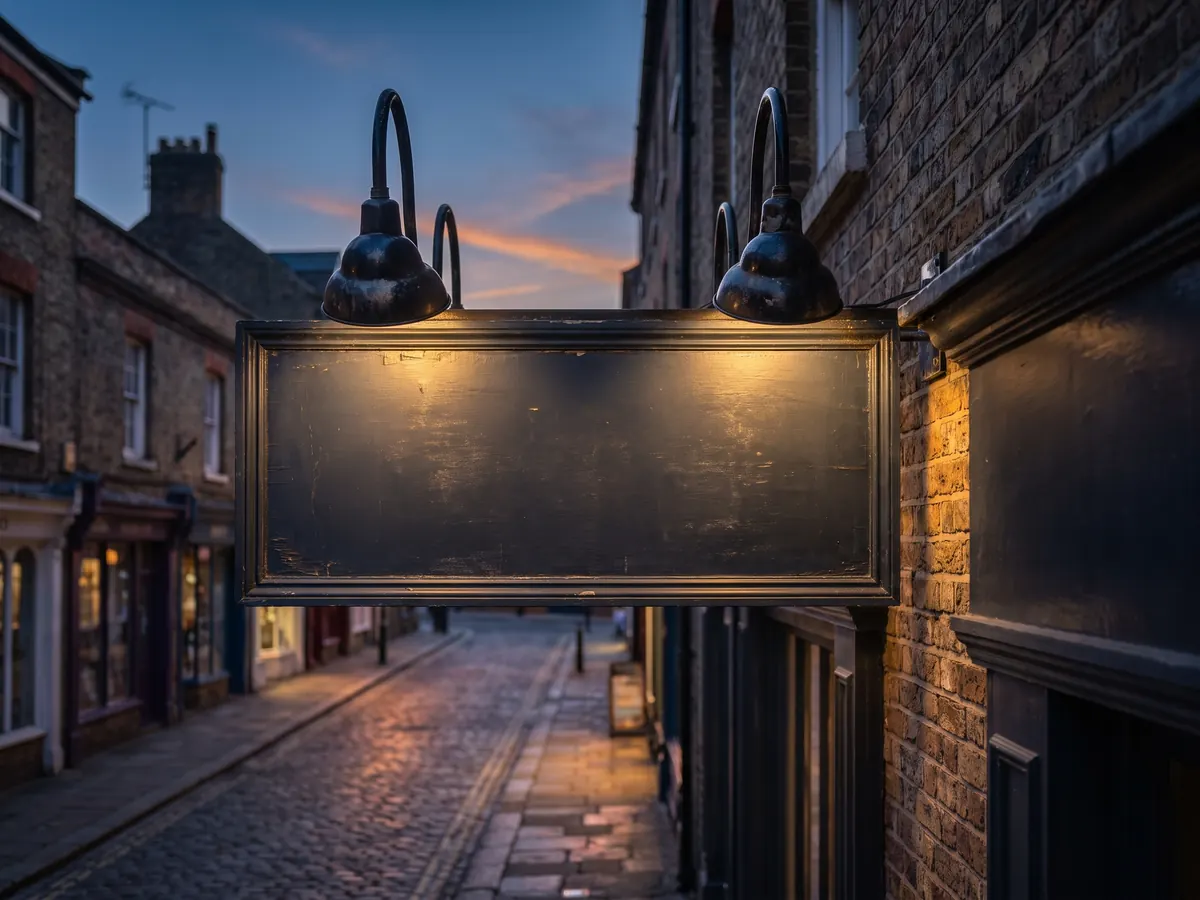
A painted or carved panel with gooseneck lamps aimed at it from above. The sign stays dark and the light lands on it. This is often the version that clears design review on a historic block, and it suits a storefront that has been standing for a century.
Sizing for a Walkable Street
A blade sign gets read on foot, from thirty or forty feet, by someone who is also reading the two signs next to yours. That sets the rules. Short copy, heavy strokes, high contrast. Your name and maybe one word about what you sell. Nothing more.
Placement matters as much as size:
- Height and clearance. The sign has to hang high enough to clear pedestrians, deliveries, and any awning already on the front. Mount it too high and it leaves the walking sight line entirely.
- Projection over the sidewalk. How far a sign may extend from the wall is set by the municipality, and a sign that hangs over public sidewalk typically needs an approval beyond a standard wall sign permit. We confirm the limits for your exact address before we draw anything.
- Historic districts. Blocks under historic designation, common around Old City and Chestnut Hill, usually add a design review step. Plan on it adding time. Traditional materials and unlit panels generally have the smoother path.
- Wind. A double-faced panel on an arm is a sail. The bracket, the anchors, and the wall behind them get specified for the load rather than eyeballed on the sidewalk.
- The paperwork. Our surveys and permitting team measures the storefront, prepares the drawings, and files with L&I or the township, including the extra approvals a projecting sign usually triggers.
If the block will not allow a sign over the sidewalk, we look at a channel letter set, an awning with a printed valance, or a wall-mounted light box instead. The goal is the same either way: get read from the direction your customers actually arrive from.
Projecting Sign Styles
These are examples of each projecting sign type, drawn to show bracket, face and lighting. They are not photographs of our installs. Tap any image to enlarge it.
Projecting Sign Questions
Do I need a permit for a projecting sign in Philadelphia?
In most cases, yes. A projecting sign needs a sign permit like any other, and because it hangs out over the sidewalk it typically requires an approval beyond a standard wall sign. If the storefront sits in a historic district, expect a design review step on top of that. We prepare the drawings, file everything, and tell you up front what the schedule looks like.
How far can a blade sign project from the building?
That depends on the municipality, the street, and whether the sidewalk below is public. Limits differ between the city and the surrounding townships, and some blocks carry their own rules. We pull the requirements for your address during the survey and size the sign to fit them, so nothing gets built twice.
Does a projecting sign have to be illuminated?
No, and many of the best ones are not. A painted or carved panel with gooseneck lamps above it gives you a night read without lighting the sign itself, and that version tends to move through design review more easily on historic blocks. If you want it lit, we build double-faced LED cabinets and metal panels with push-through acrylic copy.
Will the bracket damage my brick?
Mounted properly, no. We anchor into mortar joints where the layout allows, use stainless hardware, and seal every penetration. On old or soft masonry we check the wall during the survey and adjust the mounting. If the wall will not carry the load, we say so before you order the sign.
Get Your Name Over the Sidewalk
Send a photo of the storefront and the block it sits on. We will draw the panel and the bracket, and find out what your address allows.
267-344-8492