Electronic Message Boards in Philadelphia
Programmable LED displays that change your price, your hours, or your message from a laptop instead of a ladder.
A Sign You Can Rewrite From the Office
An electronic message board is a grid of LEDs behind a weather-sealed face, wired to a small controller and connected to software you run from a computer or a phone. Whatever you type shows up on the road. Change it as often as your business changes.
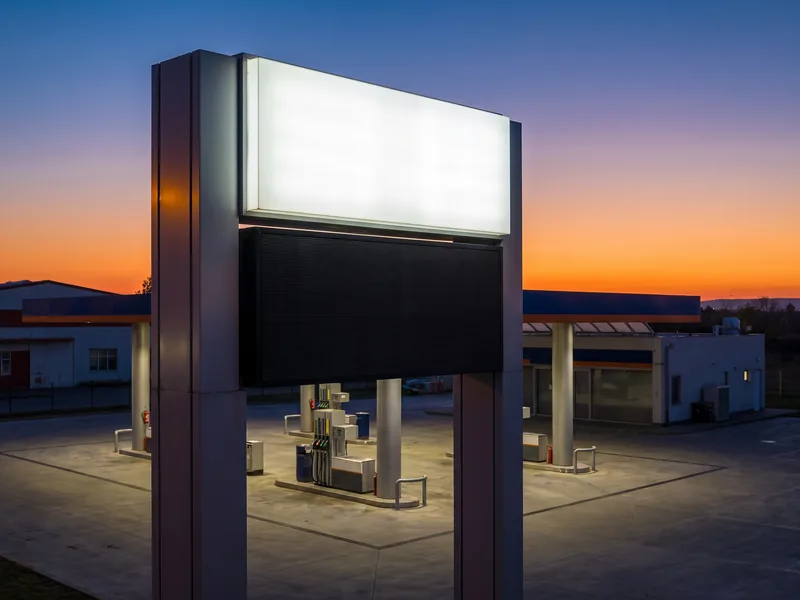
Two jobs cover most of what we build. The first is the fuel price changer: digits sized to be read at speed, updated in seconds when the rack price moves. The second is the community board, the one outside a school, a church, or a township building that carries service times, game nights, and closings.
The display is only half the job. It has to be mounted in a structure, wired to a circuit, permitted, and kept running. We handle all of it, from the survey and the permit through the install and the service calls after.
How Pixel Pitch Works
Pitch is the single spec that drives both how sharp a board looks and what it costs. It is nothing more than how far apart the LEDs sit, and the right answer depends on where your reader is standing.
- LED pixel. One dot on the face. Every price, letter, and logo is built out of them.
- Pixel pitch. The gap from one dot center to the next. Tighter pitch reads sharper up close and costs more per square foot.
- Display cabinet. The sealed housing that carries the LED modules and keeps weather off the electronics.
- Brightness sensor. A small cell that reads daylight and dims the board after dark, which many municipalities require.
- Controller. The box that receives what you send from the office and tells the pixels what to show.
- Viewing distance. How far back your reader actually stands. A wider pitch looks fine from the road, so we size the pitch to your sight line instead of selling you resolution nobody is close enough to see.
Color, Resolution, and Brightness
These are the specs that decide what a board costs and how well it reads. None of them are complicated once somebody explains them in English.
Full Color or Monochrome
Monochrome boards light one color, usually amber or red, and they do numbers and text extremely well for less money. If your board will only ever show fuel prices, a rate, or a line of text, monochrome is the honest answer.
Full color runs logos, photos, and short animations. Worth the money when you actually plan to change the artwork. A full color board showing the same static message for two years is money left on the sidewalk.
Pixel Pitch and Viewing Distance
Pixel pitch is the gap between LEDs, measured in millimeters. Smaller pitch means a finer picture and a higher price. As a rough rule of thumb, the pitch number in millimeters is close to the minimum comfortable viewing distance in meters, so a 10mm board reads clean from about 30 feet back and better from farther away.
That is why a walk-up board on a sidewalk needs a tighter pitch than one facing four lanes of traffic. Buying more resolution than your sight line needs is the most common way people overspend on these.
Brightness and Auto-Dimming
A board has to punch through direct sun at noon and then back off hard at night. Every display we install carries a photocell that reads ambient light and dims the output automatically. Run a board at daytime brightness after dark and you get complaints from neighbors, glare for drivers, and a call from the zoning officer.
Content and Scheduling
The software that ships with most systems lets you build a playlist, set how long each message holds, and schedule by day and time. Breakfast pricing in the morning, dinner special at four, closed sign on Sunday, all set once. Multiple logins let a manager post without handing over the keys to the whole board.
Into a Sign You Already Own
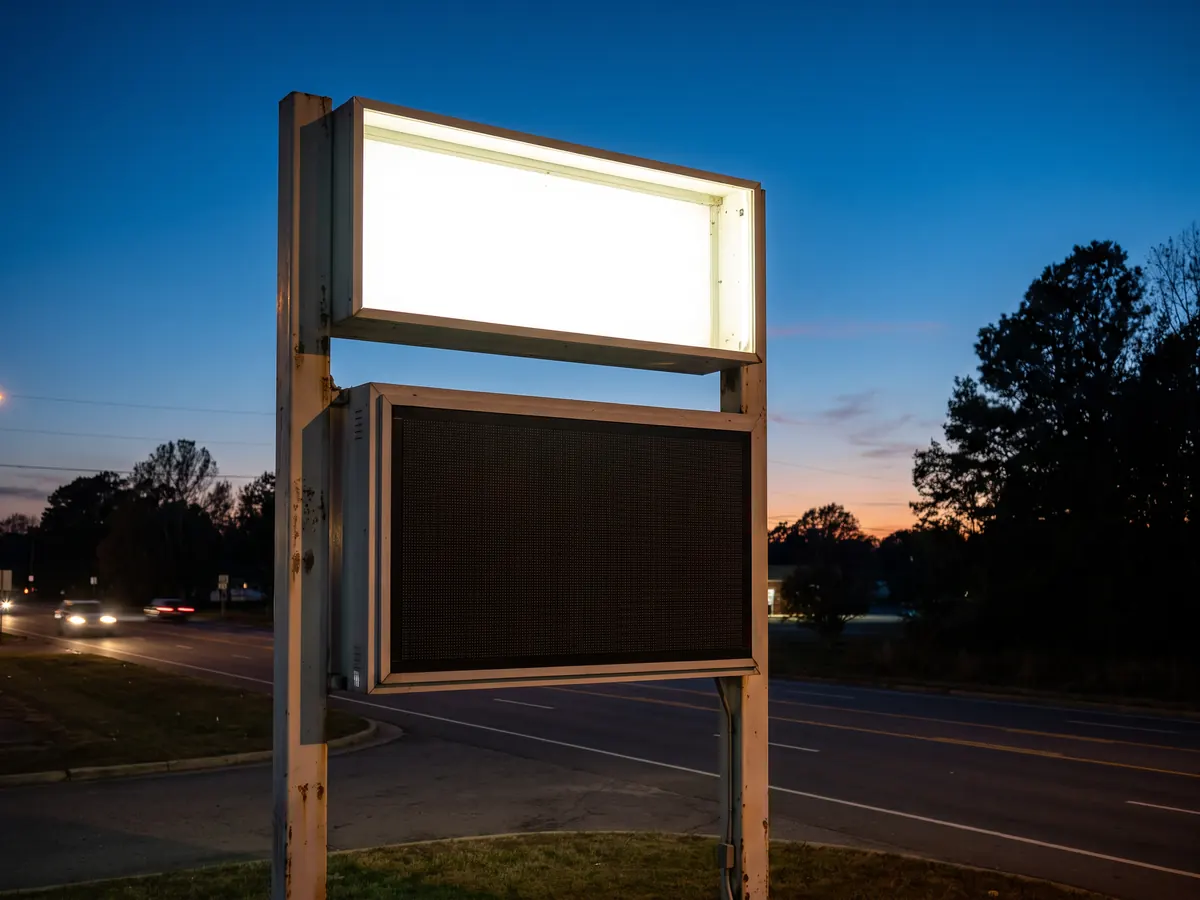
You do not always need a new structure. If your pylon or monument sign is solid, we can often rework the lower cabinet, frame the display into it, and leave your identity panel on top. Cheaper than starting over, and it usually keeps the sign inside its existing permit footprint.
Who Buys Them, and What Zoning Says
Gas stations and c-stores get the clearest return, because the price on the sign is the offer and it moves constantly. Schools, churches, fire companies, and municipal buildings use them to talk to the block. Auto dealers and repair shops run sale pricing and service specials on them, which beats reprinting a banner every month. Medical and professional offices use smaller boards for hours, new provider names, and walk-in availability, which beats taping a paper sign to the door.
Changeable displays draw more scrutiny than any other sign type. Before we quote, we check four things:
- Whether they are allowed at all. Some districts and overlays permit static signs but not changeable copy. Historic blocks are usually a no. Better to learn that in week one than after a deposit.
- Size limits. Many municipalities cap the display as a share of the total sign area, so the board you can hang depends on the sign you already have.
- Brightness limits. Night brightness rules are common, and an automatic dimming control is often required rather than optional.
- How often copy may change. Hold times get regulated. Some places measure them in seconds, some in minutes, and some ban motion and transitions outright.
Rules vary by municipality and they get revised, so we confirm the current requirements for your address rather than quoting from memory. Our surveys and permitting team does that legwork, prepares the drawings, and files with the city or township.
One more thing worth knowing before you sign anything: these are electronics living outdoors. Power supplies fail, modules go dark, and controllers lose their connection. We support what we install through repair and maintenance, and we will service most other brands too.
Boards on the Road
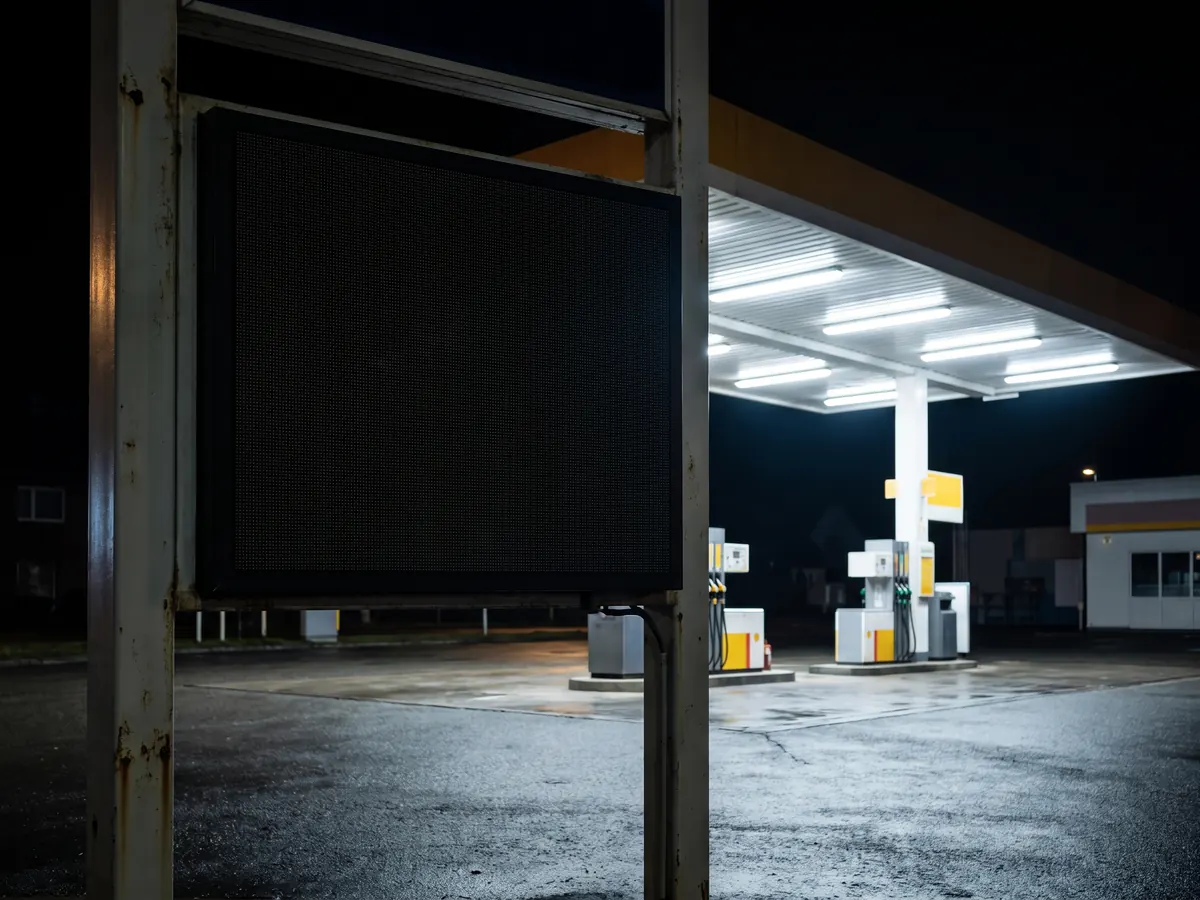
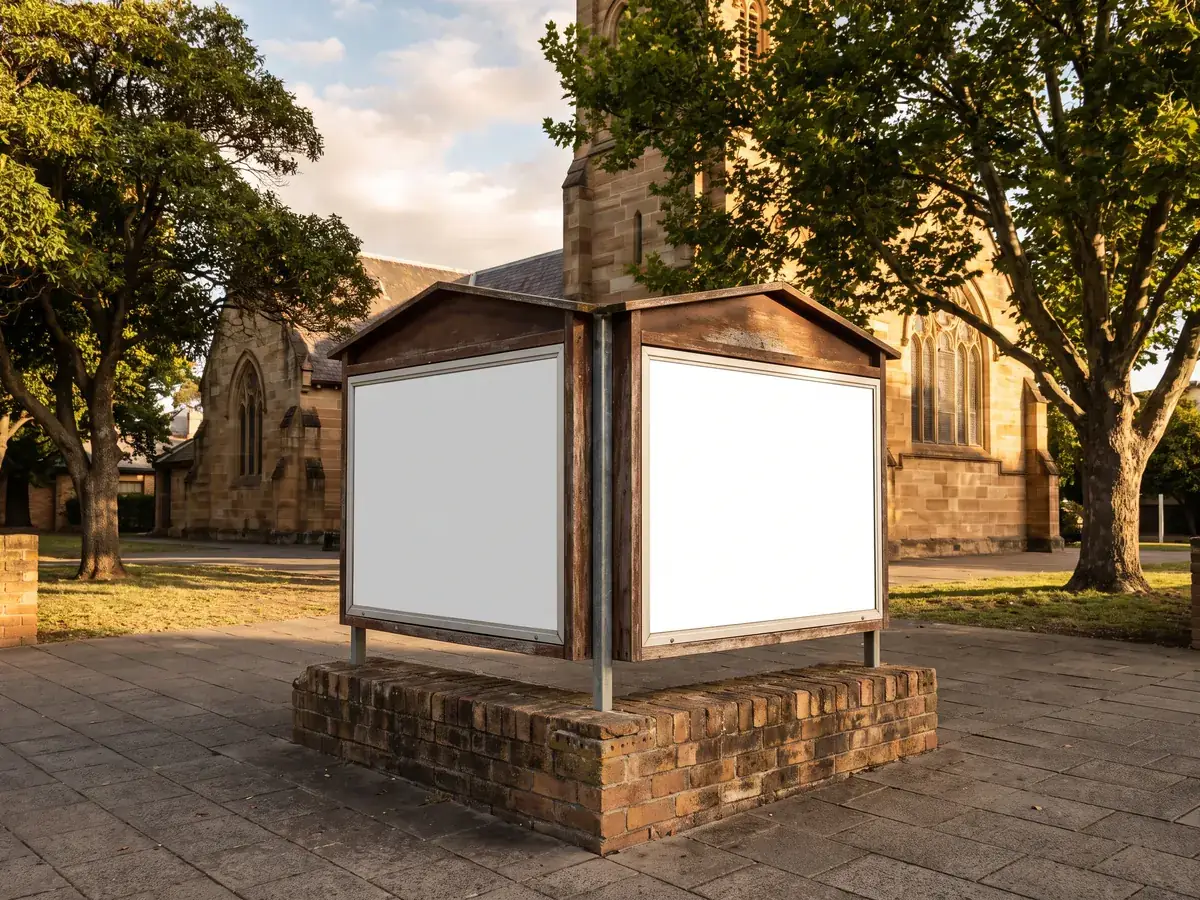
A few recent displays. Tap any photo to enlarge it.
Message Board Questions
Can I change my gas prices without going outside?
Yes. That is the whole point of a price changer. You type the new number on the office computer or a phone app and the digits on the road change in seconds. No ladder, no loose panels, no sending somebody out in the rain before the morning rush.
How big do the digits and letters have to be?
Viewing distance and traffic speed decide it. A board read from a 25 mph neighborhood street can use much smaller copy than one read across six lanes of Roosevelt Boulevard. We measure the sight line during the survey and size the display so a driver can read it and still react in time.
Do electronic message boards need a permit?
Almost always, and the review is stricter than it is for a static sign. Many municipalities set limits on display size, night brightness, and how often the copy is allowed to change. We pull the rules for your specific address before we quote, then file the drawings and chase the approval.
Can you put a display in the sign I already have?
Often, yes. If the existing pylon or monument is structurally sound, we can rework the lower cabinet, frame in the display, and keep your identity panel above it. That usually costs less than a new sign and it keeps the same permit footprint, which makes zoning simpler.
Stop Climbing the Ladder
Send the address and a photo of your existing sign. We will check what your municipality allows and price the display that fits it.
267-344-8492