Commercial Awnings in Philadelphia
Canvas, vinyl, and architectural metal. Shade for the glass, shelter for the door, and a storefront customers remember.
Three Jobs, One Awning
An awning works harder than any other piece of a storefront. It puts your name at eye level on the sidewalk, it shades the glass and cools the interior, and it keeps rain off customers standing at your door.
It is also the signature look of Philadelphia retail. Walk East Passyunk Avenue or Main Street in Manayunk and the storefronts you remember are the ones with a sharp awning over clean glass. Restaurants get covered sidewalk seating out of the deal. Retail shops get a facade with depth instead of a flat wall. On a corner property, an awning pairs naturally with a projecting blade sign so both approaches get a read.
We measure the opening, weld the frame, fit the cover, print the graphics, and install, all from one shop on Woodhaven Road.
Anatomy of a Storefront Awning
Every awning is a frame nobody sees and a cover everybody does. Here is how the two go together, and which parts can be replaced later without starting over.
- Header bar and anchors. A bar bolted flat to the facade carries the whole awning, with anchors matched to brick, block, or stucco and a height set to leave the walk underneath clear.
- Welded frame. Tube welded into one rigid frame in our shop, pitched so water sheds and braced underneath so the front edge holds its line.
- Cover fabric. Canvas or vinyl stretched drum tight over the frame, and the part that wears out long before the steel does.
- Valance. The strip hanging at the front edge, which is the best sign space on the awning and where your name and number go.
- Attachment. The cover is stapled or laced into the frame so it stays tight, and it comes off cleanly when the time comes to recover.
- Gooseneck lighting. Optional lamps arc over the top to wash the cover after dark, wired while the awning is going up.
Canvas, Vinyl, or Metal
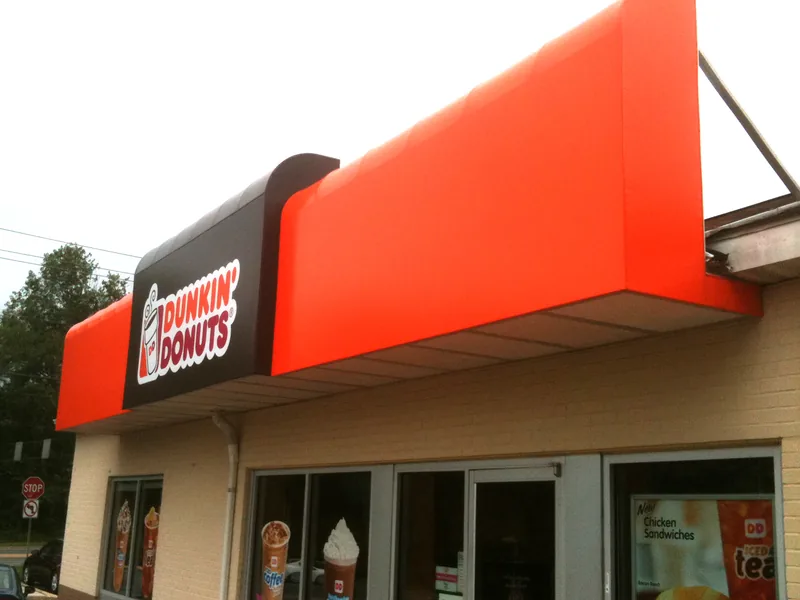
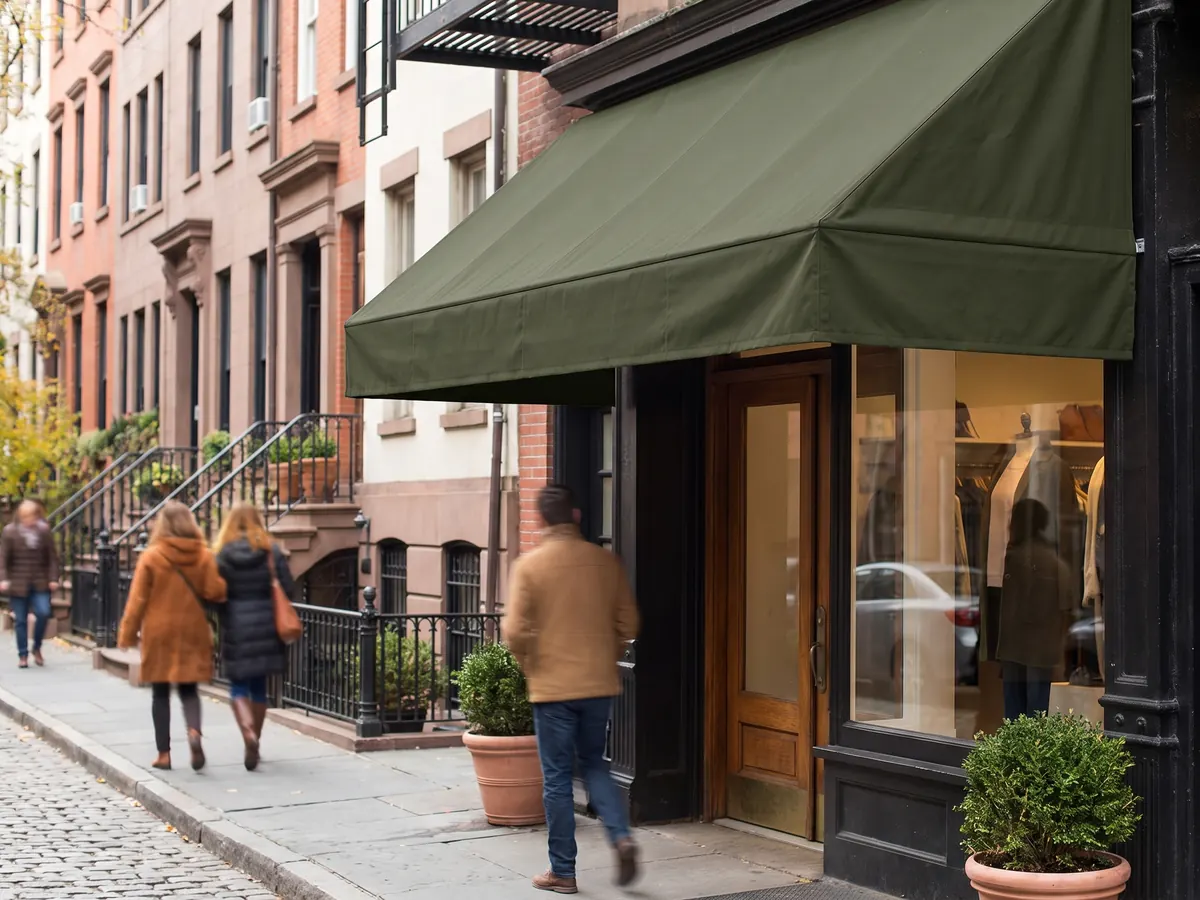
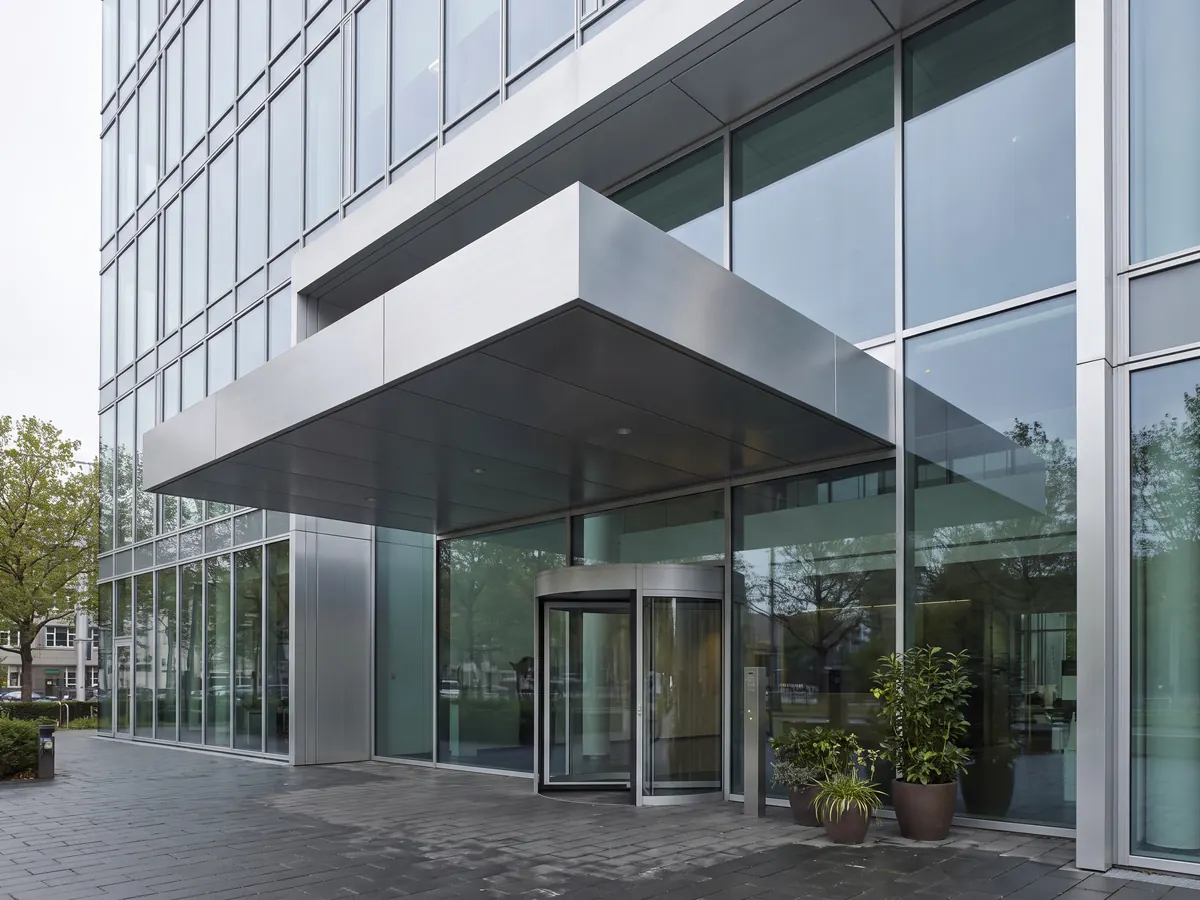
Canvas holds color and looks the part. Vinyl wipes clean and can be backlit. Metal never needs recovering. The right one depends on your building, your trade, and how much upkeep you want to own.
Canvas
Woven acrylic fabric with a matte finish and rich, even color. The classic storefront look, and the usual pick for boutiques, cafes, and offices that want warmth. Covers can be replaced on the same frame when styles or tenants change.
Vinyl
Tough, wipeable, and printable edge to edge. Vinyl shrugs off grease and weather, which is why food service leans on it, and it can be backlit so the whole awning reads like a lit sign after dark.
Architectural Metal
Fabricated aluminum canopies with clean, modern lines. No fabric to fade or recover, minimal upkeep, and a fit for new construction, medical buildings, and offices that want permanence over softness.
Printed Valances and Graphics
The valance, the strip that hangs at the front edge, is prime sign space. We print graphics in-house and match your brand colors across the whole cover, and our designers mock the awning on a photo of your actual building before anything is sewn.
Historic Districts, Permits, and the Sidewalk
An awning that projects over a public sidewalk typically needs an L&I permit, and the rules cover how far it can project and how much clearance it must leave underneath. None of it is hard if it is handled up front, and our surveys and permitting team handles it with every job.
Historic fabric adds a second step. In Old City, Society Hill, and the city's other designated historic districts, the Philadelphia Historical Commission generally reviews the design before a permit is issued, and fabric, color, and frame profile all factor into approval. We prepare drawings to that standard and keep the design inside what the district will accept, so the review is a step, not a stall.
Installation is done by our own crews: frames anchored to the facade, covers stretched drum tight, and the sidewalk cleaned up before we leave. If your frames are sound and only the fabric is tired, we can recover them instead of starting over.
Awning Styles We Build
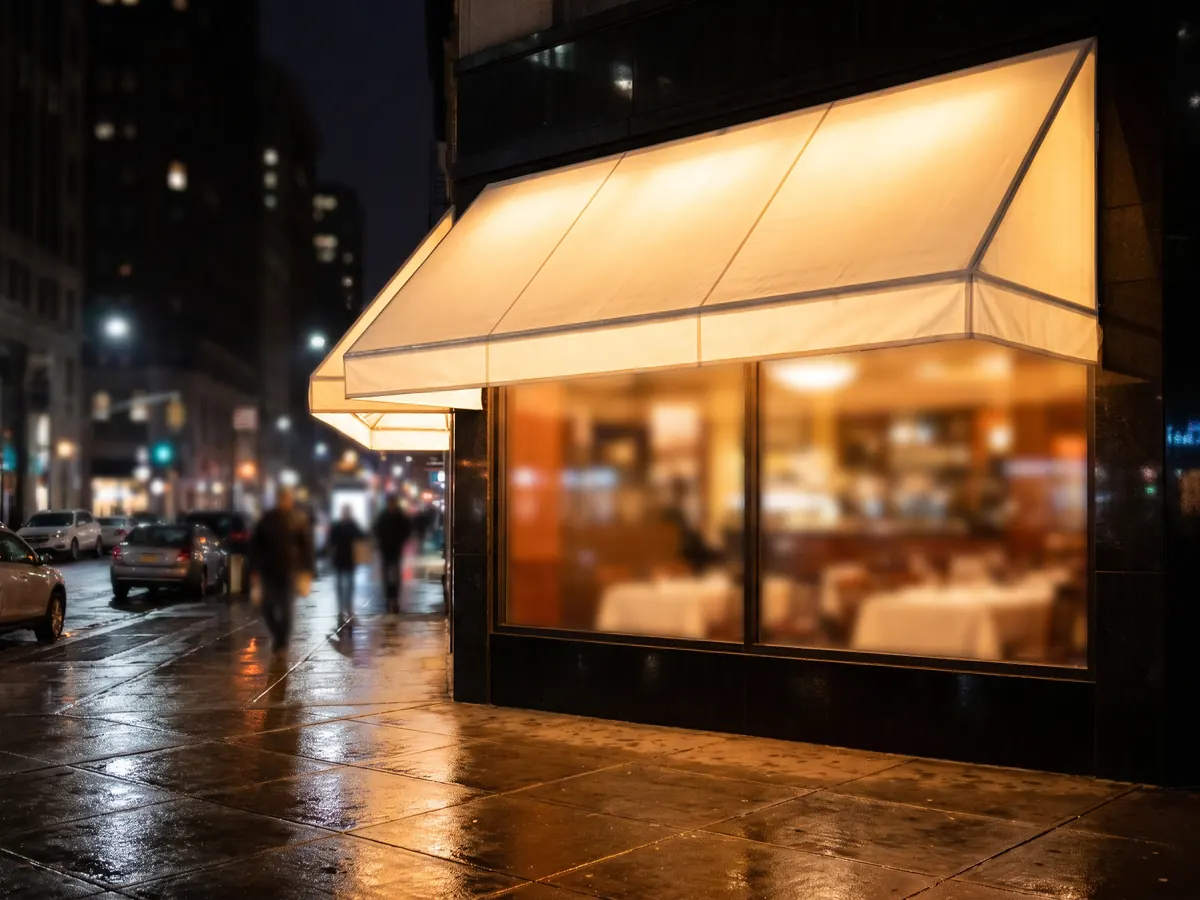
These are examples of each awning type, drawn to show the construction. They are not photographs of our installs. Our own awning photographs are being shot now, and they will replace these. Tap any image to enlarge it.
Awning Questions
Do I need a permit for an awning in Philadelphia?
Usually, yes. An awning that projects over a public sidewalk typically needs an L&I permit, with rules on projection and clearance height. In a designated historic district the design generally goes to the Philadelphia Historical Commission first. We measure, draw, and file all of it as part of the job.
Should I choose canvas or vinyl for my awning?
Canvas gives the classic matte storefront look and holds rich color. Vinyl costs less to maintain, wipes clean, and can be backlit so the awning glows at night. For restaurants and food service we usually steer toward vinyl. For boutiques and offices, canvas.
Can you print my logo on the awning?
Yes. We print and apply graphics to the valance and the main panels in-house, matched to your brand colors. A printed valance turns a plain canopy into your street-level sign.
How long does a commercial awning last?
Frames outlast fabric. A welded aluminum or steel frame typically runs for decades, while covers wear with sun and weather. When a cover fades or tears we can recover your existing frame instead of replacing the whole awning, which saves real money.
Dress the Storefront
Send a photo of the facade. We will mock the awning on your actual building and quote fabric and metal side by side.
267-344-8492