
What Does a Sign Cost?
There is no list price for a made-to-order sign. There is a short list of things that decide the number, and you can read your own project off it before you collect a single quote.
Why Nobody in This Trade Publishes a Price List
A commercial sign is not a catalog item. It is fabricated metal, acrylic, and low-voltage wiring, built to fit one specific wall or one specific piece of ground, then hung by a crew with whatever equipment that building demands. Two businesses on the same block can order what sounds like the same sign and get quotes that are not close to each other, and both quotes can be honest.
So instead of a number we cannot stand behind, here is the list of what actually sets it. Every item below moves the price in a direction we can explain. Read down it with your own project in mind and you will know, before anyone comes out, roughly where you sit and which decisions are worth revisiting.
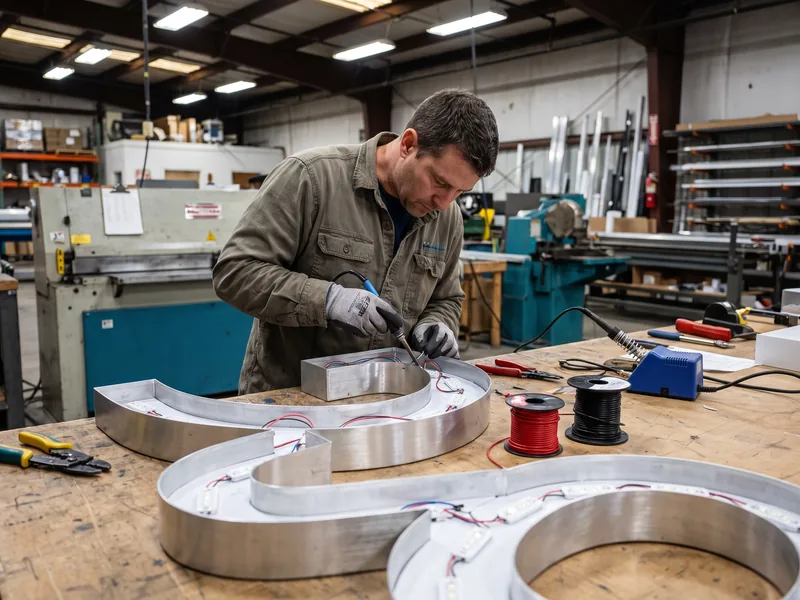
One thing worth knowing before you compare quotes at all: everything in ours is work we do ourselves. The survey and the permit filing, the fabrication in our shop on Woodhaven Road, and the installation by our own crews and cranes. There is no broker margin stacked between those steps, which is a line item you will never see itemized on a quote but will feel in the total.
The Sign Itself
Before anything touches your building, the sign has to be built. What you are asking us to build sets the floor for everything that follows.
Sign type
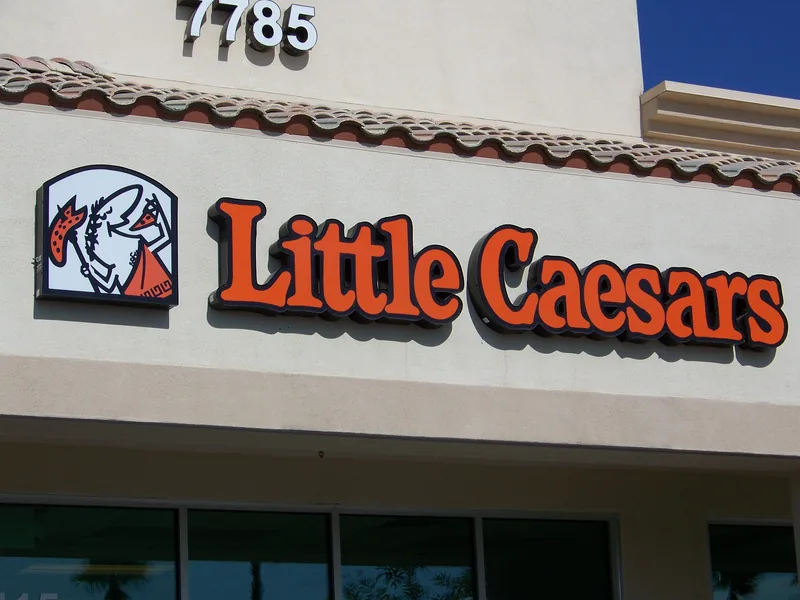
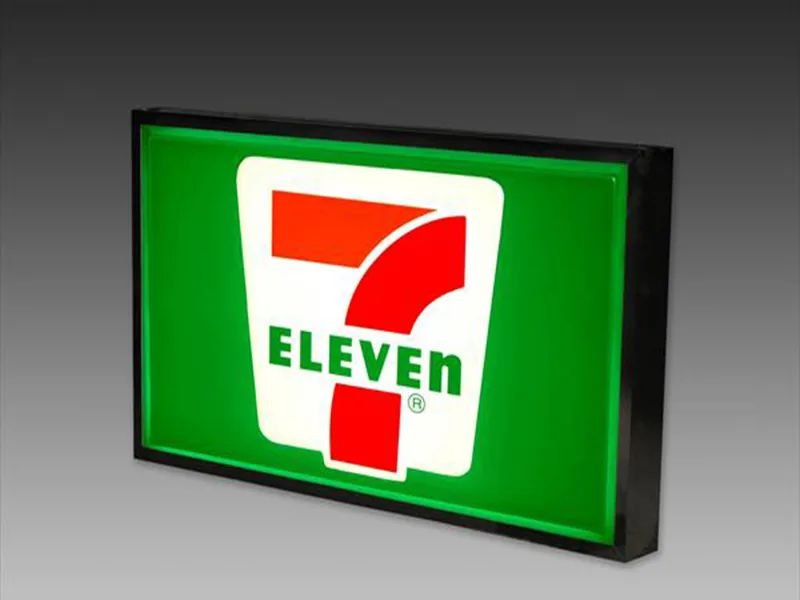
This is the biggest fork in the road. A flat panel sign is one sheet, cut and finished, with no wiring in it, and it sits at the bottom of the range. A light box cabinet adds a welded aluminum body, LED modules, a power supply, and an electrical connection. A channel letter set multiplies that work by the number of letters in your name, because every letter is its own sealed, wired, lit can. A pylon or monument sign adds a structure and a foundation underneath before any sign work starts at all. Move down that list and the number goes up at every step.
Size, and the distance it has to be read from
Size moves the price harder than any other single dimension, and it does not move in a straight line. Doubling the height of a cabinet more than doubles the aluminum in it, and it adds weight, which adds structure, which can add the equipment needed to lift it. The right size is set by viewing distance, not by how much wall you have. We measure sight lines during the survey, because a sign sized past what your road needs costs more to build, more to permit, and more to service, and nobody reads it any sooner.
Single face or double face
A double-faced sign is close to two signs sharing one frame: two faces, two sets of graphics, and inside a lit cabinet, two lighting layouts. It costs meaningfully more than a single face. It is also the only right answer when traffic passes in both directions, which is why nearly every pylon and nearly every hanging blade sign is built that way. Pay for the second face when the second direction is worth money to you, and not otherwise.
Face material
On a lit sign the face is a real budget lever. Acrylic gives the flattest surface and the truest color and pan-forms cleanly for push-through copy, which is the premium end. Polycarbonate costs more per sheet but survives contact, so it earns its money on pump islands, drive-thru lanes, and any cabinet within reach of a shopping cart. Flex-face, a tensioned printed vinyl skin over an extruded frame, is usually the cheapest way to cover a large cabinet and the cheapest face to replace years later. On big formats that one choice can separate two quotes that are otherwise identical.
Letter depth and return type
On channel letters the return is the formed aluminum side wall that gives each letter its depth. Deeper returns use more metal and more forming time, so depth costs money. So does the lighting built into the letter: a front-lit letter pushes light through a translucent face, while a halo-lit letter has a solid face and throws light backward onto the wall, which generally means more fabrication per letter and a fussier install, because the standoff distance is what makes or breaks the effect. Custom-painted returns, non-standard trim cap colors, and day-night faces that read one color unlit and another lit each add a step on the shop floor.
How the copy goes on
On a flat panel, the copy treatment is most of the price. Applied vinyl, cut or printed onto a finished face, is the fastest and least expensive. Routed copy, cut clean through the panel on our router and backed with acrylic, costs more and reads far better up close. Individual dimensional letters mounted off the face on studs cost the most of the three, and they look it. The panel underneath can be identical in all three cases.
Light, and Where the Power Comes From
Illumination is usually the largest single step change in a sign quote, and the electrical run behind it is the item that surprises people most.
Whether it is lit at all
Lighting a sign adds LED modules, power supplies, internal wiring, a weather-sealed body to keep water off all of it, an electrical connection at the building, and in most cases an electrical permit alongside the sign permit. A non-lit panel skips every one of those lines. If you trade in daylight and your storefront sits on a walkable block where people arrive on foot, an unlit sign is a legitimate answer rather than a compromise. Where a lit sign is what the corridor demands, that is worth knowing before you set the budget, not after.
How it is lit
Among lit signs the method still moves the number. An internally lit cabinet is the efficient way to light a large area, because one body, one lighting layout, and one power supply cover the whole face. A channel letter set lights each letter separately, which is more parts and more labor across the same square footage. Halo lighting costs more than front lighting. External lighting, meaning gooseneck lamps aimed at a painted or carved panel, is often the cheapest way to buy a night read, and it is the version most likely to clear design review on a historic block. An electronic message board sits at the top of the range, and its own price is set largely by pixel pitch: tighter dot spacing reads sharper up close and costs more per square foot, which is why buying more resolution than your sight line needs is the most common way people overspend on a display.
Power, and how far it has to travel
The sign needs a circuit, and what that costs depends entirely on what is already there. A spare breaker in a panel behind the wall with a short run to the sign location is a small item. A run across a roof, up a party wall, or out under a parking lot to a pylon at the road is trenching, conduit, and hours. A building with no spare capacity needs a subpanel. A site with no service at the sign at all needs new service, which means coordinating with PECO and working to their calendar as well as ours. We check the panel and trace the run during the site survey precisely because this line can move a quote further than the sign design does.
The lighting hardware itself has stopped being a variable. New work goes in on LED, which draws a fraction of what fluorescent or neon draws and has no ballasts or transformers waiting to fail. That shows up on your power bill and on the number of service calls, both of which are covered further down.
Getting It Onto the Building
Two identical signs can carry very different install numbers. The wall and the way a crew reaches it are the reason.
The mounting surface and what is behind it
The wall decides the anchors, and the anchors decide the labor. Solid brick or block with sound backup is straightforward. EIFS and stucco are a thin skin over something else, so fasteners have to reach real structure behind them and every penetration has to be sealed properly or you have bought a water problem instead of a sign. Steel-framed fascia, tile, and glass each need their own approach. Older masonry usually means anchoring into mortar joints rather than the face of the brick, which constrains the layout and costs time.
Where a facade will not take dozens of penetrations, or a landlord will not allow them, letters go up on a raceway instead: one slim painted cabinet carrying the wiring and the power supplies, with one or two wall penetrations rather than thirty. The raceway adds material to the quote and usually takes labor and future service cost back out, and in a leased space it makes the next tenant changeover far cheaper.
Access
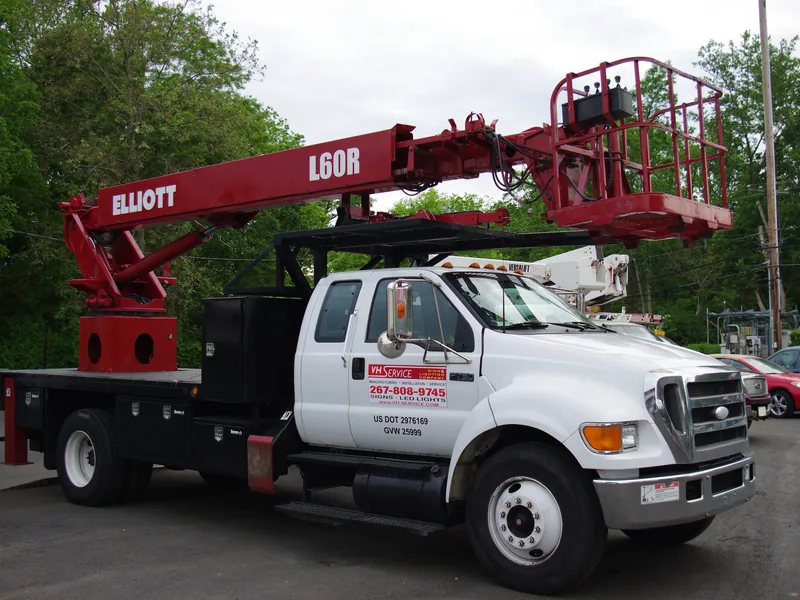
How the crew reaches the sign is a cost line of its own. A low fascia a crew can work off ladders is the cheap end. Bucket truck work costs more. Crane work costs more again, and it brings staging with it: where the truck sets up, whether the lot has the room, and whether the pick has to happen before the site opens for the day. Working over a Philadelphia sidewalk or taking a traffic lane means a street closure permit, which the city says covers booms and lifts and has to be applied for at least 10 business days before the start date. A tight rowhouse block can turn a routine lift into a planned morning with a traffic plan attached.
Our crane trucks and operators are ours, so there is no rental line and no outside margin buried inside that number, and the lift date comes off our own calendar rather than a rental yard's. The hours are still hours, though. If your sign can be hung safely from a bucket rather than a crane, we will tell you, because it is cheaper for you and faster for us.
Free-Standing Signs: the Part That Is Underground
A pylon or a monument is a structure before it is a sign, and a real share of its cost is buried where nobody ever sees it.
Before a free-standing sign goes up there is an excavation, a rebar cage, an anchor bolt template, and a concrete footing sized by an engineer to the sign, the wind load, and the soil, poured below frost depth so it stays plumb through a Philadelphia winter. Then it has to cure before anything is set on it. That is a separate trade happening on your site, and it prices like one.
- Height and face area. Taller and wider means more wind load, which means more concrete and more steel. That relationship is a curve, not a straight line, which is why an extra few feet of height can cost more than it looks like it should.
- What is in the ground. Rock, fill, a high water table, or utilities crossing the sign location all change the dig. We look for conflicts before we price the excavation rather than after.
- Restoration. A footing in a lawn is one thing. A footing in a finished parking lot means cutting asphalt or concrete and patching it back, and the patch is part of your sign quote.
- The base, on a monument. Brick or stone masonry built on site reads permanent and prices accordingly. An aluminum base fabricated in our shop and finished to match the building gets a similar look for less money and goes in faster.
- Reusing what is there. If your existing poles and footings pass inspection, a re-face or a new cabinet on the same steel skips the single most expensive part of the job. Always worth checking before anyone quotes a replacement.
The same logic applies in reverse. Where a township caps free-standing height low enough to rule out a pole sign, a monument sign designed inside the cap is usually the approvable path, and it changes the whole shape of the budget.

Permits, Engineering, and the People Who Have To Say Yes
Approvals are not a formality you can price out of a job. They are a cost line and a calendar line, and they are where budgets get saved or blown.
Permits and engineering
The City of Philadelphia publishes what a permanently installed sign needs. Its guidance states that you may need a building permit and a zoning permit, and that if the sign will be illuminated you also need an electrical permit. The city also publishes its review times: applications submitted with plans are processed within 20 business days, while installations meeting the city's EZ standard are processed while you wait. Read it at the source: Get a building permit to install signs, City of Philadelphia.
Outside the city line it is a different document for every municipality. Bensalem is not Abington, and neither one is Cherry Hill. Each writes its own sign ordinance with its own limits on size, height, illumination, and changeable copy. A free-standing sign typically needs sealed engineering drawings on top of the permit set, and where a variance is required, it adds a hearing and weeks of calendar. Our surveys and permitting team checks the code at your address before anyone draws a sign, which is the cheapest possible moment to learn that the sign you want is not the sign your zoning allows.
Landlord and center sign criteria
If you lease in a multi-tenant center or an office park, there is usually a written sign criteria document attached to your lease, and it is the real specification for your sign. It can dictate letter height, letter style, illumination type, raceway color, and whether cabinets are permitted at all. Criteria push cost in both directions: a set that mandates halo-lit letters on a painted raceway costs more than what you might have chosen, while one that mandates a standard panel in a standard size costs less. Either way it is not negotiable on install day, so send us the criteria page with your quote request. We design inside it and prepare the approval package for your landlord to sign.
Historic properties and design review
Historic designation changes the order of operations. The city guidance states that a sign on a historic property needs approval from the Historical Commission, and that Licenses and Inspections will refuse the permit application without that approval. That is a step before the permit rather than a step inside it, so it belongs in the calendar and the budget in week one rather than week ten. Our design team flags the review requirements before you commit to a concept that will not pass.
What the Sign Costs After It Is Lit
The purchase price is not the whole number. Two things carry on for as long as the sign is on your building.
Running it
LED modules draw a fraction of what fluorescent tubes or neon draw, and there are no ballasts or transformers running warm, so a modern lit sign is cheap to run compared with the one it replaced. Hours matter more than size here. A sign on a timer or a photocell that runs from dusk until close costs less to light than one burning until sunrise, and the control to do that is a small item at build time and an expensive retrofit later.
Servicing it
Signs fail in predictable ways, and where the failure sits decides what the repair costs. A power supply mounted where a technician can reach it through the face is a short visit. One buried behind a sealed cabinet is not. Letters within bucket reach cost less to service than letters that need a crane and a lane closure. We place power supplies and route wiring for the service call, because our own repair and maintenance techs are the ones who come back.
The cheapest sign of all is often the one you already own. If the cabinet is sound and the frame is straight, a new face or an LED retrofit typically costs far less than a new sign and gets done faster. Ask for that comparison before anyone quotes you a replacement, from us or from anybody else.
How We Put a Number On It
The quote is free, and it is a real one: measured, drawn, and priced by the people who will build and hang the sign.
The site survey
We come out and measure the sign area and the mounting surface, check the electrical panel and trace the power run, note what the wall is actually made of, photograph the facade for the drawings, and look at how a truck would reach the sign. Nothing after this step is a guess.
The zoning check
We confirm what your address is allowed to carry before anyone falls in love with a sign it cannot have. Type, size, height, placement, and illumination all get checked against the code for that property.
The drawing
Our designers place a scaled rendering on a photograph of your actual building, with materials, colors, and lighting called out. You approve a real sign at real proportions, not an artist's impression on a stock storefront.
The quote
One number covering design, fabrication, permitting, and installation, with the assumptions written down. If something we found at the survey could still move the price, we say so on the quote rather than discovering it on install day.
What To Have Ready
None of this is required. All of it makes the first conversation faster and the first number closer to the last one.
- The address, and whether you own or lease. Ownership changes who has to approve the sign and how far we can go into the wall.
- Your lease sign criteria page. If you are in a center or an office park, this one document answers more questions than anything else you can send us.
- Vector artwork for your logo. A print-quality file goes straight into production. A photograph of a business card means a redraw first.
- A photo of the storefront or the site. Taken straight on, with a person or a car in the frame for scale. Two or three angles is better.
- Rough dimensions. Approximate is fine: the width of the fascia, the height of the sign band, roughly how far the building sits back from the road.
- Whether an existing sign is coming down. Removal, make-safe, and haul-away are real work, and so is patching what the old sign left behind.
- Where your electrical panel is. Even knowing whether there is a spare breaker narrows the biggest variable on a lit sign.
- Your real budget and your real date. Both change what we recommend. Neither is a number we work backward from to fill.
- Any deadline attached to the job. A lease commencement date, an opening, or a franchise deadline changes the sequence, because permits usually set the pace rather than fabrication.
Send it to the quote form or call the shop at 267-344-8492 and talk it through with someone who can price it.
Price the Sign You Are Actually Buying
Each of these pages covers what the sign is made of, what it needs to get approved, and which choices inside it move the number.
 Channel LettersFront-lit & halo-lit
 Light BoxesWall & cabinet signs
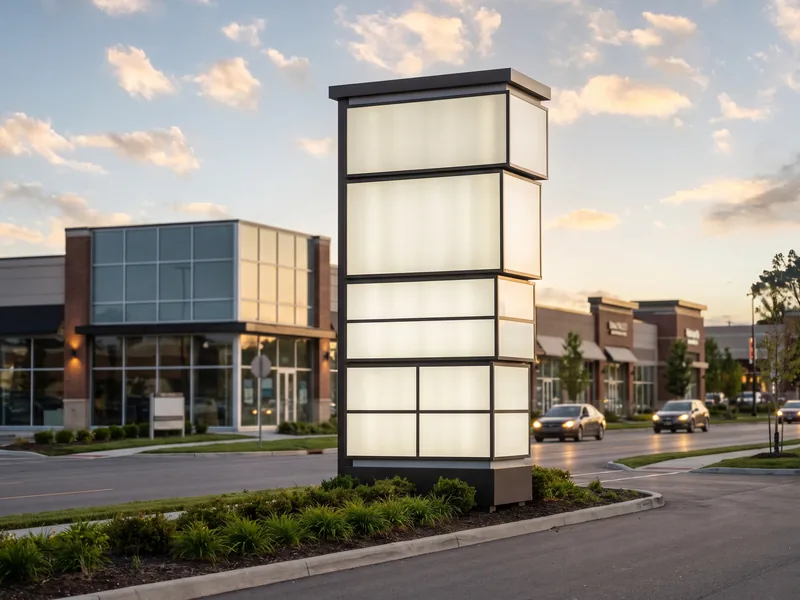 Pylon SignsPole & multi-tenant
 Flat SignsPanel & post-and-panel
Buying for a whole portfolio rather than one storefront? Property managers price signage differently, because standard tenant panel sizes and a planned changeover schedule cost less over a lease cycle than a run of one-off signs.
Sign Cost Questions
Can you give me a ballpark number before the site visit?
Often yes. Send the sign type, the rough dimensions, and a photo of the building with a person or a car in it for scale, and we can tell you the range you are in and whether the budget you have is realistic. The firm number comes after the survey, because the wall, the power, and the access are what turn a range into a price.
What is the single biggest cost driver on a storefront sign?
Illumination first, then access. Lighting a sign adds LED modules, power supplies, internal wiring, a sealed body to keep water off all of it, an electrical connection, and in most cases an electrical permit. Access adds equipment and crew hours. A non-lit panel on a low fascia and a lit letter set four stories up are the same words in two very different projects.
Is it cheaper to repair the sign I already have?
Very often, yes. If the cabinet is sound and the frame is straight, a new face or an LED retrofit typically costs far less than a new sign and gets done faster. We inspect first and quote it both ways so you are choosing with real numbers instead of guessing.
Do permit and engineering costs come on top of the sign?
They are part of what a sign costs, and they are worth asking about in every quote you collect. A free-standing sign typically needs sealed engineering drawings and a concrete footing. An illuminated sign adds an electrical permit. We tell you what your address is going to need before you commit to a design, so none of it lands on the invoice as a surprise.
Does a bigger sign always cost more?
Size moves the number more than almost anything else, because material, weight, structure, and the equipment needed to lift it all scale together. Bigger is not automatically better. A sign sized past what your sight line needs costs more to build, more to permit, and more to service, and nobody reads it any sooner. We size from viewing distance measured at the site.
Get the Real Number for Your Building
Send a photo of the storefront and rough dimensions. We will survey the site and price the whole job as one number.
267-344-8492