
Monument Signs in Philadelphia
Ground-level presence for entrances that matter. Masonry, aluminum, and light, built to read at windshield height.
The Sign That Sits Instead of Stands
A monument sign is a free-standing sign built low to the ground on a solid base instead of poles. It reads at windshield height, right where drivers slow down to turn in, which makes it the natural sign for an entrance drive.
You see them at office parks in Blue Bell and Fort Washington, medical plazas along County Line Road, school campuses, and the apartment communities that property managers run across the region. Where a pylon sign shouts to a highway, a monument speaks to the driveway.
We design the sign to match the building it fronts, build the cabinet and faces in our own shop, and set the whole thing on a proper footing. One contract, one crew, one finished entrance.
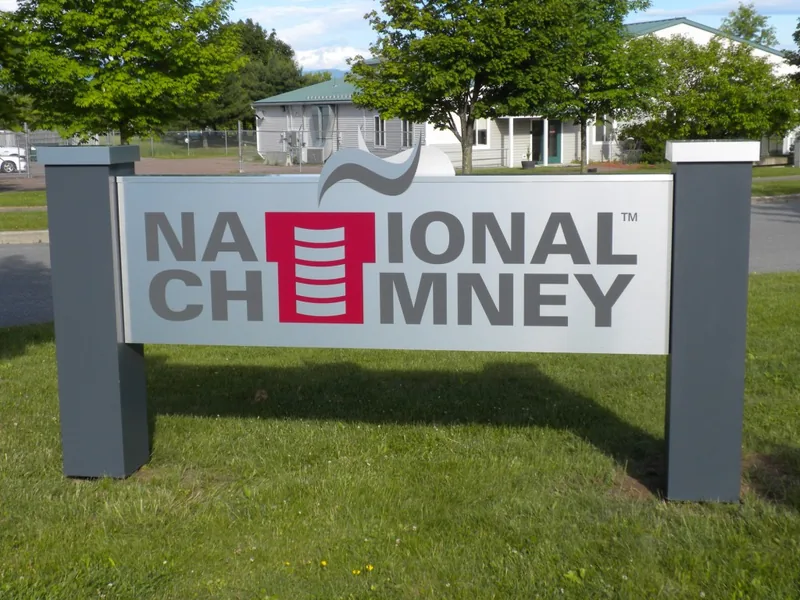
Anatomy of a Monument Sign
A monument is a small structure with a sign on top of it, and most of the work is out of sight. Here is what stacks up from the footing to the cap, and why each layer is there.
- Cap. The finished slab across the top. It closes the sign off and sheds water away from the face.
- Lit sign cabinet. The aluminum box that carries your name, with LEDs inside pushing light through the face after dark.
- Tenant panels. A row of changeable panels for the businesses in the building. One slides out when a tenant moves.
- Masonry base. The brick or stone mass that gives the sign its weight and ties it back to the building it fronts.
- Internal steel frame. Hidden steel running from the footing up into the cabinet. The frame carries the sign, not the brick.
- Concrete footing. Poured below grade and below frost depth so the sign stays plumb through a Philadelphia winter.
Bases, Faces, and Light
Masonry or fabricated aluminum. Routed panel or carved urethane. Lit from inside, lit from behind, or lit from the ground. Every one of those choices is a budget lever.
The Base
Brick or stone masonry built on site, split-face block, or an aluminum base fabricated in our shop and finished to match the building. Masonry reads permanent. Fabricated aluminum gets a similar look for less money and goes in faster.
The Face
Routed aluminum panels with push-through acrylic copy, flat panels with dimensional letters, or carved HDU, a high-density urethane that takes deep, crisp letterforms without the weight of stone. Multi-occupant buildings get changeable tenant panels in standard sizes.
The Light
An internally lit LED cabinet glows evenly after dark. Halo-lit letters give a softer, architectural read. Ground lighting keeps the sign itself unlit for districts that want it quiet. Our LED lighting work keeps the power draw and the maintenance calls low either way.
The Extras
Street address copy, changeable tenant strips, and matching directional signs deeper in the site. Planning them together keeps the whole property reading as one system instead of a pile of one-off signs.
Getting a Monument Sign Approved
Monument signs have an easier ride through zoning than tall signs, and in many suburban townships they are effectively the only free-standing option. A few things still have to be right:
- Height caps. Many townships in Bucks and Montgomery County cap free-standing sign height low enough to rule out a pylon. A monument designed inside the cap usually approves without a variance.
- Setback and sight lines. The sign has to sit clear of the right of way and cannot block a driver's view of oncoming traffic at the driveway. We check the sight triangle during the survey.
- The footing. A monument carries real weight, so it gets a concrete footing below frost depth, not a pad on grade.
- The paperwork. Our surveys and permitting team measures the site, prepares the drawings, and files with the city or township before anything is built.
Some municipalities also want the street address on the sign. We design it in from the start so it helps the read instead of cluttering it.
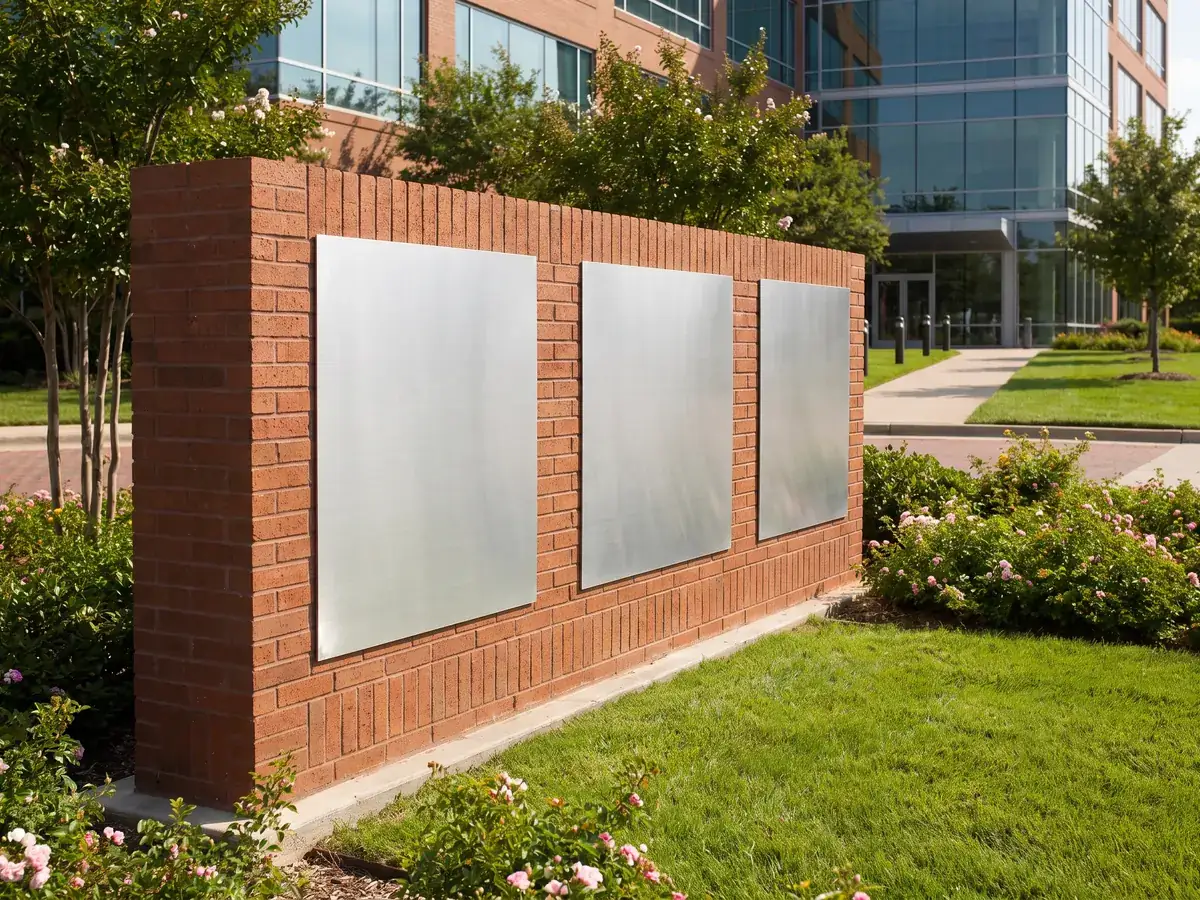
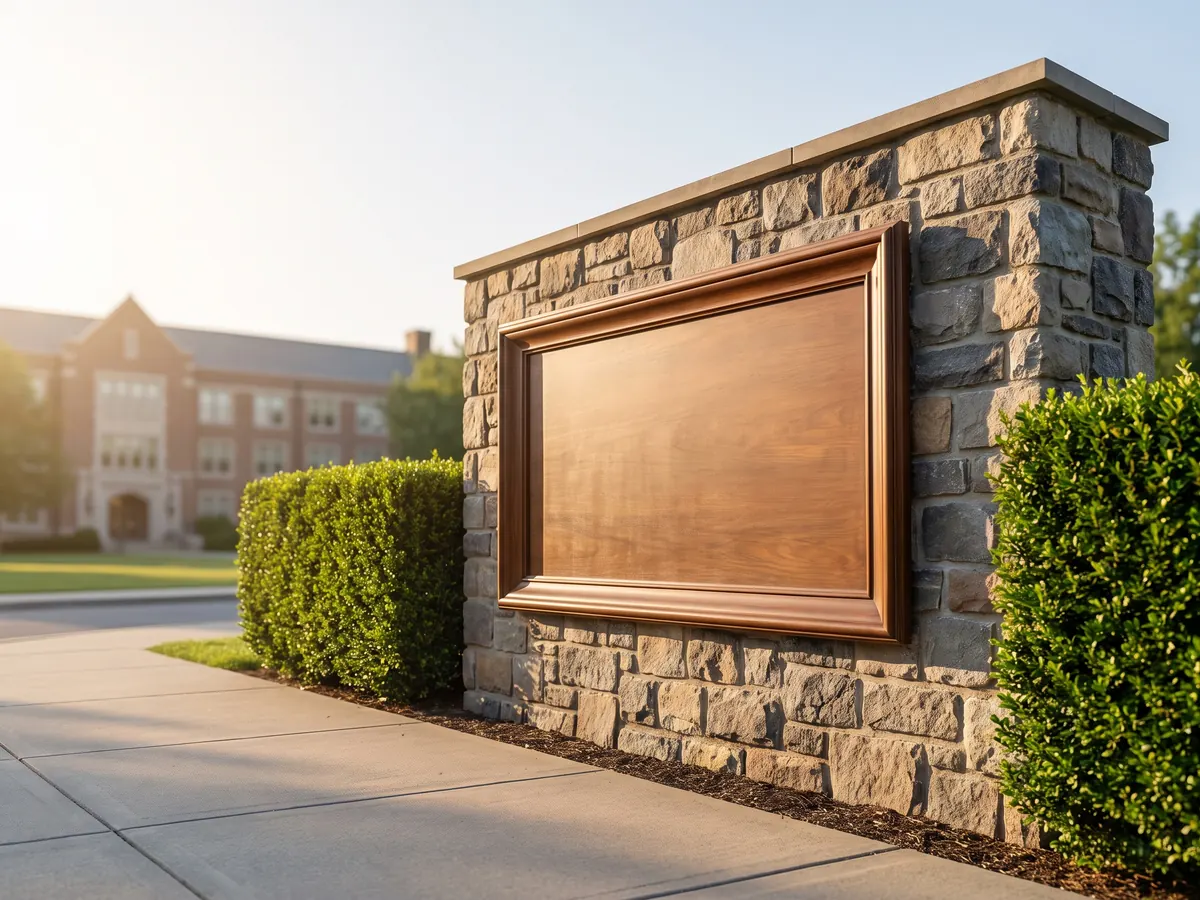
Monuments at the Curb
A few recent builds. Tap any photo to enlarge it.
Monument Sign Questions
What does a monument sign cost?
The base drives the price. A brick or stone masonry base costs more than an aluminum base finished to look like one, and an internally lit cabinet costs more than a non-lit face. Tell us the look you want and the budget you have, and we will show you options at both ends.
Should I choose a monument sign or a pylon sign?
Pick the sign that matches how people find you. Monument signs read at windshield height at an entrance drive on a slower road. Pylons read from far off on a highway. Many townships limit free-standing sign height, and in those cases a monument sign is usually the approvable path.
Can a monument sign be illuminated?
Yes. Options include an internally lit aluminum cabinet, halo-lit letters mounted to the face, or discreet ground lighting. LED keeps the power draw low, and we plan the electrical run during the survey, even when the sign sits a long way from the building.
Do monument signs need a permit?
In most municipalities, yes. Free-standing signs are reviewed for size, setback from the road, and sight lines at the driveway. We survey the site, prepare the drawings, and file with the city or township so approval is in hand before we pour a footing.
Anchor Your Entrance
Send us the address and a photo of the drive. We will design a monument that matches the building and passes review.
267-344-8492