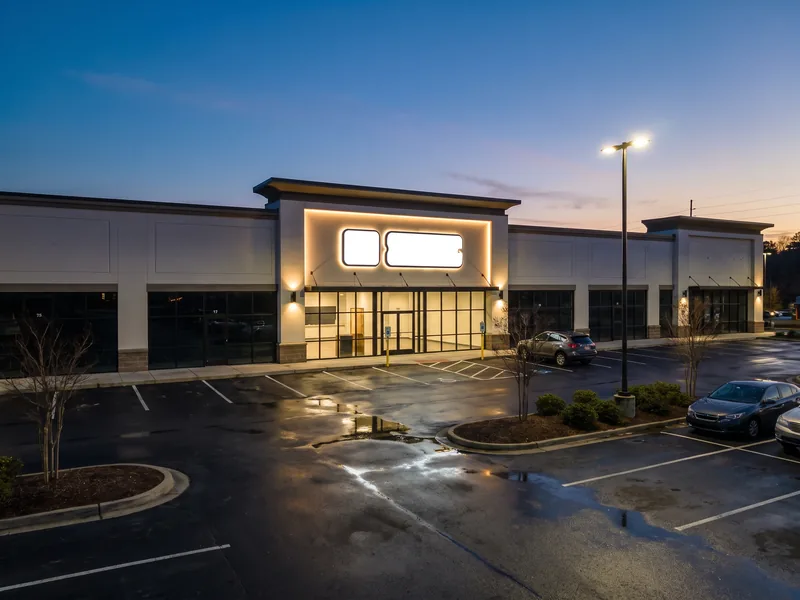
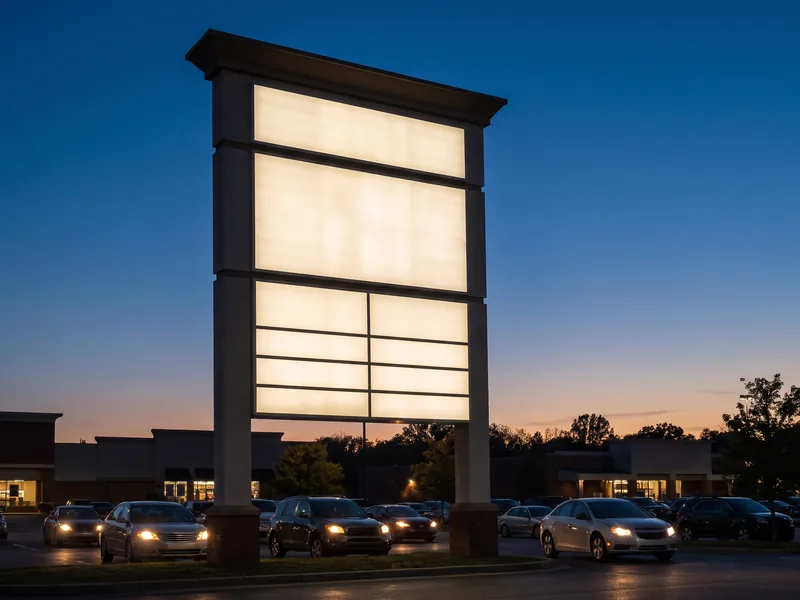
Before we draw anything, a quote has to answer three questions: who has to approve this sign, how far away does the customer read it, and how often does it have to change. The answers move by industry, and they are the reason a restaurant quote and a shopping-center quote look nothing alike.
Approval is what stops projects. A retail tenant answers to the sign criteria exhibit in the lease. A branded fuel station answers to its fuel brand image program. A medical suite answers to a federal standard: the 2010 ADA Standards for Accessible Design require interior signs identifying permanent rooms and spaces to carry raised characters and contracted Grade 2 braille. See sections 216.2 and 703 of the 2010 ADA Standards for Accessible Design.
Every one of them answers to the local sign code on top of that. In Philadelphia the Department of Licenses and Inspections issues the permit, and the City states that an exterior sign needs a zoning permit, and a building permit except for painted signs and adhesive or vinyl graphics and letters, with an electrical permit added when the sign is illuminated. See the City of Philadelphia guidance on getting a building permit to install signs. Outside the city line it is a different ordinance in every township across Bucks, Montgomery, and South Jersey. We read the governing document before we design, not after you have approved a concept.
Reading distance sets the size. A driver moving at speed on Roosevelt Boulevard needs a pylon tall enough to clear the tree line. A couple walking Frankford Avenue needs a blade sign hanging out over the sidewalk. Undersizing is expensive, because the correction is a second sign rather than an adjustment.
Change frequency sets the construction. Fuel prices change daily, tenant panels change with the lease, window graphics change with the season. Those get built to come apart on purpose. A practice name that will read the same in ten years gets built to stay put.